Ads
Spanish gastronomy: tapas and paellas It is not just a combination of words attractive to search engines; it represents one of the most influential cultural expressions in Europe and the world.
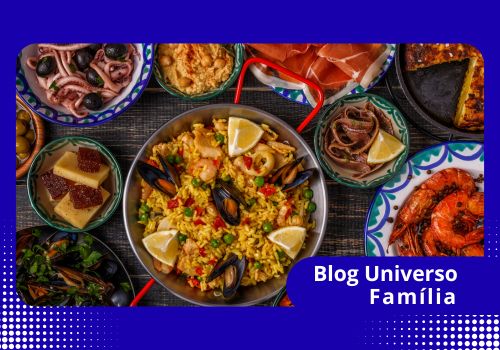
Anyone who approaches Spanish cuisine discovers much more than recipes: they find history, territory, social coexistence and a very particular way of understanding the table.
Before going deeper, it is worth reviewing a brief summary that will guide this reading: the cultural origin of tapas, the evolution of paella as a national symbol, the social value of sharing food in Spain.
A relevant official fact, an analogy to understand its cultural impact, a clear table with regional differences, two original examples applied to current consumption, a final reflection and a block of frequently asked questions.
A cuisine that is lived, not just consumed
Talking about Spanish cuisine means talking about shared time.
Ads
Tapas originated as a practical way to accompany drinks, but evolved into a social ritual.
Paella, meanwhile, went from being a rural dish to an international emblem.
In 2025, Spanish cuisine remains relevant because it did not freeze in the past.
Traditional restaurants coexist with contemporary offerings without breaking the link with local products or regional identity.
The cultural value of tapas in everyday life
Tapas don't adhere to a single recipe or a fixed list of ingredients. They function as a flexible gastronomic concept that adapts to the social context.
In cities like Madrid, Seville, or Granada, ordering tapas isn't just about eating small portions. It's about conversation, moving from one place to another, and sharing decisions as a group.
This dynamic transforms the culinary experience into a collective act.
From a cultural perspective, tapas reduce social barriers. They don't require extreme formality or long waiting times.
Instead, they encourage spontaneous interaction, something increasingly valued in an era dominated by screens.
Paella: from the Valencian countryside to the world
Paella has a well-documented origin in the Valencian Community, linked to agricultural work and the use of locally available ingredients.
Rice, vegetables, rabbit, chicken and olive oil formed the original base.
Over time, variations emerged depending on the region and the availability of ingredients. Even so, paella maintains a clear structure that distinguishes it from other international rice dishes.
In the current context, paella serves as a symbol of national identity. It's not just about flavor, but also about method, patience, and respect for the cooking process.
A fact that supports its international relevance
According to data from the Spanish Ministry of Agriculture, Fisheries and Food, gastronomy is among the three main reasons for travel for more than 30% of international tourists who visit the country.
This statistic confirms that cuisine, and especially iconic dishes like tapas and paellas, directly influence the choice of destination.
The figure does not reflect passing trends, but rather a reputation built over decades.
Regional differences that enrich the experience
Spain does not have a homogeneous cuisine. Each region contributes nuances that broaden the meaning of Spanish gastronomy: tapas and paellas.
| Region | Focus on lids | Paella style |
|---|---|---|
| Andalusia | Free tapas with a drink | Less presence |
| Madrid | Varied and modern tapas | Mixed adaptations |
| Valencia | Simple lids | Traditional paella |
| Catalonia | Creative tapas | Soupy rice dishes |
This diversity avoids monotony and strengthens the national culinary identity.
Read more: Italian cuisine: the most iconic recipes
Tapas as a gastronomic language
Tapas function as a common language that supports multiple accents.
A seasoned olive, a well-made tortilla, or some homemade croquettes convey as much as a complex dish.
Example 1: A couple visiting several bars in San Sebastián is not looking to be satisfied immediately.
Enjoy trying small dishes, comparing flavors, and setting the pace of the meal. That freedom transforms food into an experience.
This approach contrasts with more rigid models of gastronomic consumption.
Paella and the importance of time
Preparing paella requires attention and respect for the process. Rice doesn't allow for last-minute improvisations.
Fire, broth, and rest serve specific functions.
Here a clear analogy appears: paella is like a good conversation, it needs a beginning, development and end without abrupt interruptions.
Accelerating any of those stages compromises the final result.
This logic connects well with the current interest in slow food and a more conscious relationship with what we eat.
The influence of the Mediterranean Diet
Spanish cuisine is part of the Mediterranean Diet, recognized by UNESCO as an Intangible Cultural Heritage of Humanity.
This recognition focuses not only on ingredients, but also on social practices, respect for seasonality, and intergenerational transmission.
Tapas and paellas fit perfectly into this framework, prioritizing fresh products, olive oil, and shared consumption.
Tradition and modernity without conflict
One of the reasons why Spanish gastronomy: tapas and paellas Its continued strength in 2025 lies in its ability to adapt.
Contemporary chefs reinterpret formats without breaking with the essence.
It's not about replacing tradition, but about engaging with new techniques and audiences. This approach prevents stagnation and keeps Spanish cuisine in the global conversation.
Current experiences that confirm its validity
Example 2: In tourist cities, more and more travelers are opting for short paella workshops or guided tapas tours.
These activities do not aim to turn the visitor into an expert, but rather to bring them closer to the cultural context of the dish.
This trend reinforces the educational and experiential value of gastronomy.
Why it remains a global benchmark
From an EAT perspective, Spanish cuisine demonstrates accumulated experience, recognized authority, and trust backed by institutions and real data.
It does not depend on viral trends, but on a solid foundation built with consistency.
Tapas and paellas represent access, identity and continuity, three key factors for cultural permanence.
Conclusion: more than dishes, a way of connecting
Understanding the Spanish gastronomy: tapas and paellas It involves looking beyond the plate.
It means understanding how food structures relationships, times, and social spaces.
In a fast-paced world, this cuisine offers pause, conversation, and shared enjoyment.
Isn't a gastronomic model that invites you to eat slowly and mindfully appealing?
Read more: Typical Mexican dishes you can't miss
Frequently asked questions about Spanish gastronomy
Are all the lids small?
Not necessarily. The size varies depending on the region and establishment.
Does paella always include seafood?
The traditional Valencian version does not include them; there are later adaptations.
Is it possible to eat well outside of tourist areas?
Yes. Many of the best places are in local neighborhoods.
Is Spanish cuisine healthy?
In general, yes, especially when it follows the principles of the Mediterranean Diet.
The Spanish gastronomy: tapas and paellas It remains relevant in 2025 because it authentically connects flavor, culture, and coexistence, without artifice or empty promises.