Ads
Start a tour of Typical Mexican dishes you can't miss It means immersing yourself in flavors that represent identity, history, and culinary diversity.
Before going deeper, it is worth reviewing a clear summary: what distinguishes Mexican gastronomy in the world, why its preparations remain relevant today, and which regions concentrate the greatest gastronomic wealth.
One relevant official fact, two authentic examples, an analogy that facilitates understanding, a table with key ingredients, and a smart selection of must-try dishes.
Ready to discover what makes this cuisine unique?
Mexican cuisine invites you to explore a vast universe where each recipe holds memory, technique, and passion.
Ads
Review the Typical Mexican dishes you can't miss It is more than a gastronomic guide; it functions as a window into culture, community rituals and culinary creativity that has crossed borders.
The national gastronomy has been considered an Intangible Cultural Heritage of Humanity by UNESCO since 2010, a recognition that highlights the collective work between traditional cooks, farmers and communities that safeguard ancestral techniques.
According to INEGI, more than 90% of Mexican households cook with traditional ingredients at least once a weekThis demonstrates the enduring relevance and cultural power of these flavors.
Exploring this cuisine could be compared to opening a living book: each page reveals a different story, written with ingredients that tell centuries of evolution.
And yet, isn't it fascinating how each region manages to reinterpret its roots without losing its authenticity?
Mexican culinary identity: an evolving heritage
Mexican gastronomic richness is built upon a constant dialogue between tradition and modernity.
Corn, chili, and beans form the historical base; however, current creativity allows these ingredients to be rediscovered without altering their cultural essence.
The country's geographical diversity also expands the repertoire: mountains, coasts, valleys and deserts contribute unique textures, aromas and techniques.
While many cuisines around the world are betting on risky fusions, Mexico preserves a particular magic: it transforms the everyday into culinary expressions full of character.
This explains why many travelers consider it essential to know Typical Mexican dishes you can't miss during their stay in the country.
Regions with the greatest gastronomic wealth
Although all Mexican entities possess a strong culinary identity, several stand out for their tradition, historical influence, and preservation of techniques.
1. Oaxaca
Recognized as the heart of traditional cuisine, home to emblematic moles, varied tamales and drinks like tejate.
2. Puebla
Its viceregal legacy combines Mesoamerican ingredients with European influences; chile en nogada is one of its symbols.
3. Yucatán
The Mayan and Caribbean influence creates recipes with citrus, smoky and spicy flavors, such as cochinita pibil.
4. Mexico City
A space where ancient techniques coexist with modern expressions; native corn has a constant presence.
Table of essential ingredients in Mexican cuisine
| Ingredient | Main use | Featured regions |
|---|---|---|
| Corn | Tortillas, tamales, atole | The whole country |
| Chili | Sauces, stews, marinades | Central, southern and southeastern regions |
| Bean | Protein base, accompaniments | North and Central |
| Prickly pear | Salads, stews, snacks | Central and Bajío regions |
| Cocoa | Drinks, moles, desserts | Chiapas, Tabasco |
Read more: Italian cuisine: the most iconic recipes
Typical Mexican dishes you can't miss
The following are preparations that represent technique, flavor, and tradition.
Their selection reflects both their historical relevance and their current presence in contemporary kitchens.
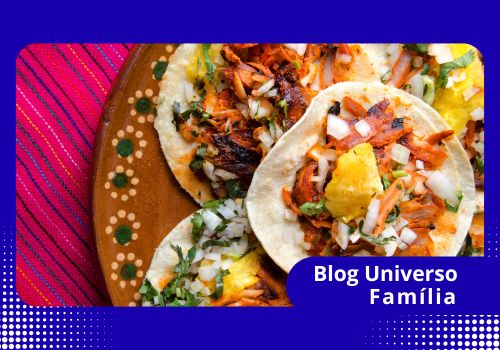
Tacos al pastor
This dish from the capital has managed to transcend borders thanks to its balance between sweetness, acidity and spices.
The meat marinated in achiote rotates slowly in front of the fire, generating an irresistible aroma.
Its modern preparation coexists with roots that recall the Lebanese influence in the country.
For this reason, many visitors consider it essential to include it among the Typical Mexican dishes you can't miss.
Oaxacan mole
The complexity of Oaxacan mole is the result of a careful mixture of ingredients that can exceed twenty.
The combination of chilies, cocoa, spices, and seeds creates deep layers of flavor.
Although there are seven traditional moles in Oaxaca, each family adapts the recipe according to their own customs, which generates unique and respected variations.
Pozole
Few recipes represent Mexican conviviality as well as pozole.
Prepared with cacahuazintle corn, meat and aromatic herbs, it appears in family celebrations and national festivities.
White, red, or green pozole allows you to experience flavors that change from state to state.
Cochinita pibil
Yucatán contributes this iconic recipe prepared with meat marinated in achiote and sour orange juice.
Slow cooking wrapped in banana leaves guarantees a deep and slightly smoky flavor.
Despite its age, it continues to be one of the most requested dishes by tourists and locals.
Chiles en nogada
Its combination of ingredients—fruit, meat, and a smooth Castilian walnut cream—makes it a unique preparation.
Furthermore, it possesses a historical symbolism linked to the Independence of Mexico.
Its balanced flavor and tricolor aesthetic take it straight to the list of Typical Mexican dishes you can't miss.
Two authentic examples of gastronomic experiences
To help the reader visualize real-life situations without resorting to extensive narrative fiction, two clear and applicable examples are presented:
Example 1: Family route through Puebla
A family taking a short tour of the historic center often includes a stop at a small local eatery, where traditional cooks serve mole poblano accompanied by freshly made tortillas.
This experience allows us to understand how recipes passed down through generations are preserved.
Example 2: Travelers exploring local markets
Many tourists visiting Oaxaca start their day by trying chipilín tamales and atole in traditional markets.
This practice provides a real perspective on the social role that these spaces fulfill, where artisans, producers and cooks coexist.
An analogy to understand the diversity of Mexican gastronomy
Imagine Mexican cuisine as a large, handcrafted tapestry.
Each thread represents an ingredient, a technique, or a ritual, and together they form a work that remains strong thanks to the union between regions and traditions.
If one of those threads were to disappear, the final result would lose its strength.
This is how national gastronomy works: it only reaches its splendor when all its elements coexist in balance.
Why are these dishes still so relevant?
The rise of contemporary restaurants, the revival of pre-Hispanic techniques, and the growing interest in native ingredients have once again boosted Mexican cuisine worldwide.
In addition, the export of products such as native corn, cocoa, and dried chilies has allowed international chefs to incorporate these elements into global recipes.
However, the essence of the Typical Mexican dishes you can't miss It is still present in everyday spaces:
Restaurants, markets and homes where hundreds of cooks keep traditions alive.
Tips for enjoying these dishes like a true local
Observe where the residents eat; they tend to choose reliable places with authentic recipes.
Ask about ingredients and techniques; most establishments enjoy sharing their story.
Pair each dish with its traditional accompaniment, such as agua fresca, warm tortillas, or handmade salsas.
Let the local flavors surprise you; many recipes change slightly between regions.
Conclusion
Discover the Typical Mexican dishes you can't miss It opens the door to an authentic cultural experience, where gastronomy acts as a bridge between past and present.
Each recipe speaks of identity, territory and memory, but also reflects constant innovation.
By exploring markets, inns, and traditional kitchens, you can understand why this culinary heritage continues to thrive and evolve.
If you want to appreciate Mexico from a complete perspective, its food will always be an ideal starting point.
Read more: Mexican gastronomy: tradition and modernity
Frequently Asked Questions (FAQ)
1. Are all traditional dishes spicy?
No. Several can be mild, like white pozole or sweet tamales, although most include more intense options for those who enjoy chili.
2. In what season are chiles en nogada eaten?
Generally between August and September, when the walnut and the pomegranate are at their peak.
3. Where can I safely try these recipes?
Traditional markets, family-run restaurants, or certified restaurants are usually reliable places with a high level of authenticity.
4. Are tacos al pastor the same throughout the country?
They vary slightly depending on the region. Mexico City retains the most popular version, but the north and the Bajío region include interesting variations.