Ads
Safari in Africa: adventure and nature for the whole family It's not just an exotic travel idea; it has become one of the most enriching experiences for those seeking to connect children and adults with real, living, and moving nature.
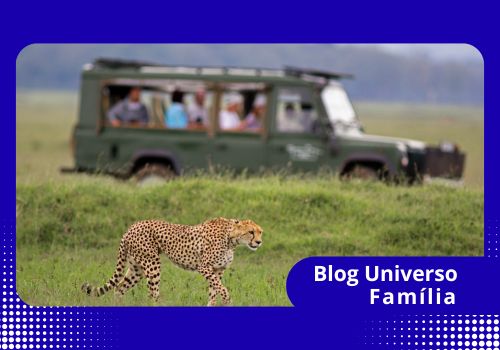
Observing animals in the wild, learning about conservation, and sharing moments away from screens redefines the concept of family vacations in 2025.
Before going deeper, it's important to understand the scope of this reading: what a family safari really means, why Africa is the most complete destination, how to choose the right country, what safety measures to consider, and a relevant official fact.
A clear analogy to understand its educational impact, a practical table with recommended destinations and, at the end, answers to frequently asked questions.
Why is a safari in Africa ideal for family travel?
Traveling as a family requires balance. Beautiful scenery isn't enough; you need safety, learning, and experiences that work for different ages.
Ads
In that context, Safari in Africa: adventure and nature for the whole family It stands out because it combines environmental education, local culture, and genuine entertainment.
Unlike theme parks, there is no artificial script here.
Children learn by observing elephants in their natural habitat, while adults rediscover the value of silence and patience.
Each tour is adapted to the family's pace, with certified guides who clearly and accessibly explain what is happening around them.
In addition, many African lodges have evolved towards a "family friendly" approach, offering spacious rooms, children's menus and guided activities for children, always under strict safety protocols.
Africa: a continent ready for responsible tourism
Africa is not a destination to be taken off the beaten track. Countries like Kenya, Tanzania, South Africa, Namibia, and Botswana have decades of experience in regulated safaris and sustainable tourism.
The current infrastructure allows for safe transfers, accessible medical services, and certified tour operators.
One relevant fact supports that preparation: according to the World Wildlife Fund (WWF), approximately 20% of the African territory is designated for protected areas, between national parks and nature reserves.
This figure reflects a real commitment to conservation and to a controlled tourism model, where responsible observation replaces indiscriminate exploitation.
This approach directly benefits families, as it reduces risks and ensures authentic experiences.
Learning that doesn't fit in a classroom
A Safari in Africa: adventure and nature for the whole family It functions as a living class of science, geography, and values.
Children understand concepts such as biodiversity, food chains, and ecological balance without needing books.
The experience is like opening a life-size interactive book: each page is a different landscape and each chapter, an unexpected encounter with wildlife.
This analogy helps to understand why so many educators recommend this type of trip as a training supplement.
Beyond knowledge, empathy emerges.
Seeing how a local community protects its environment changes the way children perceive consumption, respect, and environmental responsibility.
Safety and planning: keys to traveling with peace of mind
Safety is usually the primary concern for parents. Fortunately, modern family safaris are designed with clear protocols.
Enclosed vehicles, specialized guides, authorized routes, and strict rules minimize any risk.
The planning includes recommended vaccinations, comprehensive travel insurance, and a choice of certified accommodations.
It is also important to respect the minimum ages for certain tours, as not all parks accept young children on long safaris.
A serious operator reports transparently, without exaggerated promises or omissions.
Two real-life examples of a family safari
To better understand what this experience is like, it is worth looking at two specific and current situations:
Example 1:
A family with children aged 8 and 12 chooses Kruger National Park in South Africa.
During the safari, children participate in educational activities led by rangers, while adults enjoy longer tours.
The trip balances learning, rest and unhurried wildlife observation.
Example 2:
In Tanzania, a family opts for the Serengeti ecosystem combined with cultural visits to Maasai communities.
Children learn about local traditions and conservation, while parents appreciate the organization and safety of the itinerary.
Both cases reflect how Safari in Africa: adventure and nature for the whole family It adapts to different expectations without losing authenticity.
Recommended destinations for family safaris
Below is a table with options recognized for their infrastructure, security, and family-friendly approach:
| Country | Park or Reserve | Ideal for families | Main feature |
|---|---|---|---|
| South Africa | Kruger National Park | Yeah | Complete infrastructure |
| Kenya | Maasai Mara Reserve | Yeah | Great annual migration |
| Tanzania | Serengeti | Yeah | High biodiversity |
| Namibia | Etosha | Yeah | Self-guided safaris |
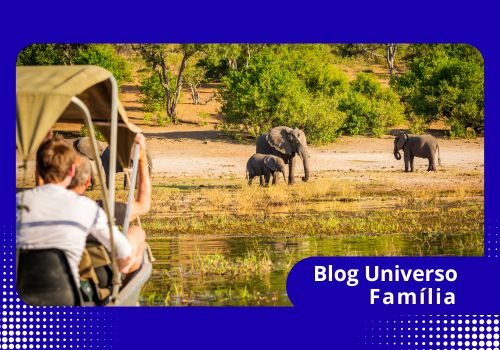
| Botswana | Chobe | Partial | Elephants in the wild |
This selection responds to real criteria of safety, accessibility and quality of tourist services in 2025.
Read more: 10 tips for stress-free travel with children
Emotional impact and family connection
A safari not only transforms the way you see the world; it also strengthens family ties.
Sharing the excitement of a sighting or the wonder at a landscape creates lasting memories.
An inevitable question arises: how many vacations manage to combine learning, excitement, and real interaction without digital distractions?
Few experiences achieve that level of connection.
The absence of rigid routines allows for deep conversations, spontaneous laughter, and mindfulness that is rarely achieved in everyday life.
Responsible tourism and environmental ethics
Choose Safari in Africa: adventure and nature for the whole family It implies taking an ethical stance.
Well-managed tourism generates income for local communities, funds conservation projects, and reduces poaching.
Responsible operators explain clear rules: do not feed animals, keep your distance, and respect nature's rhythms.
That ethic is transmitted to children naturally, without forced speeches.
Traveling like this teaches that enjoying the world also means taking care of it.
Practical tips before traveling
Planning ahead makes all the difference.
It is advisable to choose dry seasons to facilitate sightings, check updated migration requirements and hire certified guides.
Comfortable clothing, binoculars, and patience are just as important as the itinerary.
A safari doesn't guarantee programmed shows; it offers authentic encounters, and that uncertainty is part of the charm.
Conclusion: an experience that leaves a lasting impression
Safari in Africa: adventure and nature for the whole family It represents much more than a trip.
It is an emotional, educational and cultural investment that has a long-term impact.
By 2025, with greater environmental awareness and improved safety standards, Africa is consolidating its position as a reliable and transformative destination for families.
Those who return from a safari are never the same. Their perspective changes, their priorities are adjusted, and the memories remain vivid.
For those seeking more than just rest, this experience offers meaning, learning, and real connection.
Read more: Latin America: incredible places to explore as a family
Frequently Asked Questions about Family Safaris in Africa
Is it safe to travel with children on a safari in Africa?
Yes, provided that certified operators and recognized parks are chosen, and official health and safety recommendations are respected.
From what age is a safari recommended?
Generally from 6 or 7 years old, although it depends on the park and the type of tour. Some lodges offer specific programs for children.
Is a safari very physically demanding?
Not necessarily. There are convenient options, with short transfers and accommodations suitable for families.
Do you really learn during the journey?
Definitely. Direct observation and interaction with local guides generate deep and lasting learning.
Is it worth the cost?
For many families, the experience, the learning, and the memories justify the long-term investment.
A well-planned safari doesn't promise superficial luxury; it offers something more valuable: an authentic experience that connects the family with nature and with themselves.