Ads
Smart home: devices that make your home more practical It's not just a technological trend:
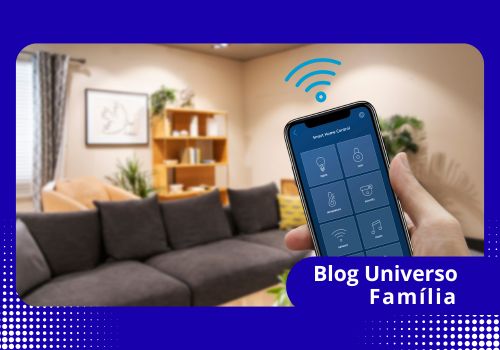
It is a silent transformation that redefines the way we live, work, and care for our environment.
In recent years, home automation has gone from being a futuristic luxury to a real necessity for those seeking comfort, energy efficiency, and security.
In this article you will discover what a smart home is, how these devices can simplify your daily life, which ones are the most useful in 2025, and how to choose them according to your needs.
In addition, you will learn specific data on the growth of this sector, two real-world application examples, and a comparative table of the most popular devices in Mexico.
Ads
Are you ready to imagine a home that thinks for you?
What is a smart home and why is it revolutionizing modern life?
A smart home It is a connected space where appliances, security systems, lighting, climate control and entertainment are managed from a mobile phone, voice assistant or central panel.
The goal is not only comfort, but also efficiency.
According to a report by Statista (2024)More than 451% of Mexican households already have at least one smart device, and that figure is expected to exceed 601% by 2026.
The growth responds to the desire to optimize resources and reduce energy costs, but also to the search for greater security and remote control.
Real advantages of having a smart home
Turning your home into a connected ecosystem offers tangible benefits:
Energy saving: Intelligent systems automatically adjust the temperature or electricity consumption according to the time of day or the presence of people.
Enhanced security: Cameras with facial recognition, motion sensors, and smart locks reduce the risk of intrusions.
Total comfort: You can turn on lights, play music, or open blinds with a simple voice command.
Remote management: Total control from anywhere in the world, ideal for those who travel or work away from home.
Imagine you forgot to turn off the living room lights before leaving. A simple tap on your app or a command to Alexa solves the problem in seconds.
That is the essence of it Smart home: devices that make your home more practical and self-employed.
Key devices for a smart home in 2025
By 2025, smart devices will be more accessible, interoperable, and sustainable.
Below are the most recommended tools for building a functional and efficient ecosystem:
1. Voice assistants
Amazon Echo, Google Nest, and Apple HomePod have become the central brain of the smart home.
They not only allow you to control other devices, but also offer information, reminders, and entertainment.
2. Smart lighting
Smart LED bulbs, such as those from Philips Hue or TP-Link, allow you to adjust the color and intensity from your mobile phone.
In addition, they can be synchronized with motion sensors or programmed routines.
3. Smart thermostats
A notable example is the Nest Learning Thermostat, which learns your habits and automatically adjusts the temperature to reduce energy consumption by up to 20%.
4. Security cameras and sensors
Security becomes proactive: cameras with artificial intelligence, such as Arlo or Ring, recognize faces and send personalized alerts.
Some even integrate with domestic drones to patrol the home.
5. Connected appliances
Refrigerators that tell you when a product expires or washing machines that calculate the exact amount of detergent are examples of how connectivity has come to the kitchen and laundry.
Table: Most popular devices in Mexico (2025)
| Device type | Featured Brand | Main function | Average price (MXN) |
|---|---|---|---|
| Voice assistant | Amazon Echo | Voice control | 1,500 – 2,800 |
| Smart lighting | Philips Hue | Savings and ambiance | 800 – 1,200 |
| Smart thermostat | Google Nest | Thermal regulation | 4,000 – 5,500 |
| Security camera | Ring Stick Up Cam | Remote monitoring | 2,000 – 3,200 |
| Smart lock | Yale Linus | Keyless access | 3,500 – 5,000 |

Read more: Digital Safety: Protect Your Family from Online Scams
How to choose the right devices for your home
Before buying, analyze your real needs.
Not every home requires a complete system; sometimes, starting with a couple of well-chosen devices is enough.
Practical tips:
Evaluate compatibility with your preferred voice assistant.
Prioritize devices that integrate energy efficiency.
Check the manufacturer's update policy: an unsupported system can quickly become obsolete.
Consider data security: privacy should be an essential part of your decision.
A clear example: a family in Guadalajara decided to install presence sensors and automatic locks connected to their mobile phones.
The result was 30% less energy consumption and a significant reduction in maintenance costs.
Environmental impact and energy savings
Beyond comfort, the Smart home: devices that make your home more practical It represents a step towards sustainability.
Connected systems allow monitoring of water, electricity and gas usage, promoting responsible consumption.
According to the International Energy Agency (IEA)Homes that implement smart automation can reduce their electricity consumption by up to 25% annually.
This saving is reflected not only in the bill, but also in the carbon footprint.
You could say that a smart home acts as a "digital thermometer" of efficiency: it detects excesses and adjusts every detail to maintain balance, as if the home itself were consciously breathing.
Challenges and precautions
Although the benefits are clear, there are challenges that should not be ignored.
Cybersecurity: Every connected device is a potential gateway to your personal data. It's vital to update the firmware and use strong passwords.
Initial cost: Although prices have fallen, a complete ecosystem still requires investment.
Compatibility: Some devices do not interact well between different brands or protocols.
The balance lies in combining functionality and security without sacrificing the user experience.
Example of intelligent integration
In Monterrey, a pilot apartment uses a unified system that combines CO₂ sensors, automated blinds, and thermostats linked to the local climate.
The system adjusts itself every morning according to the outside temperature and the presence of people, achieving an ideal environment without manual intervention.
This type of integration demonstrates that the Smart home: devices that make your home more practical It is no longer a distant concept, but an everyday tool to improve quality of life.
The future of smart homes in Mexico
Projections indicate that by 2030 more than 20 million Mexican households will be connected to smart systems.
The advancement of the 5G network and the adoption of artificial intelligence will generate even more adaptive homes, capable of anticipating needs and acting preventively.
It's not just about technology: it's a new way of living. The house becomes a discreet assistant that learns, adjusts, and evolves with you.
Conclusion
Adopt a Smart home: devices that make your home more practical It means entering an era where technology works in your favor, saves time, conserves your resources, and improves your well-being.
The key is to integrate these advances with awareness and balance, so that the home is not only modern, but also sustainable and safe.
The future is already knocking at the door; the question is: will you let it in?
Read more: Differences between 4G, 5G and Wi-Fi 6 explained easily
Frequently Asked Questions
1. Do I need high-speed internet to have a smart home?
Yes, a stable connection is essential to ensure synchronization and remote control.
However, many current devices also work in local mode when there are network failures.
2. What happens if a device stops receiving updates?
You could lose compatibility or security.
That's why it's advisable to choose well-known brands that guarantee long-term support.
3. Are voice systems really secure?
Yes, provided they are configured properly.
Major manufacturers incorporate end-to-end encryption and options to delete voice history.
4. Can I start with a few devices and expand later?
Of course. It's best to start with a voice assistant or lighting system and then expand as needed.
5. Is the initial investment worthwhile?
Definitely, yes. Although the initial expense may seem high, the savings in energy, time, and safety more than compensate in the medium term.