Ads
Traveling to Japan as a family is much more than a tourist experience: it is an immersion in a country where the culture, technology and tradition coexist in perfect harmony.
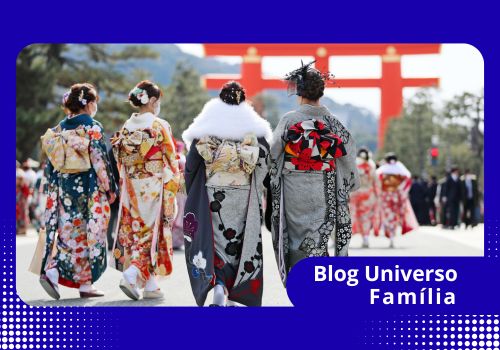
In this article, you'll discover how to plan an unforgettable family trip, what cultural aspects enrich the experience, how Japanese innovation improves everyday life, and why their respect for tradition continues to inspire the world.
Summary:
- Introduction to familiar Japan
- Culture and education in Japanese daily life
- Technology at the service of families
- Traditions that teach values
- Unmissable experiences with children
- Practical tips for family travel
- Conclusion
- Frequently Asked Questions
Introduction to familiar Japan
Explore Japan as a family: culture, technology and tradition It is discovering a country where contrasts intertwine naturally.
Tokyo dazzles with its skyscrapers and bullet trains, while Kyoto captivates with its temples and Zen gardens.
Ads
But beyond the destinations, what truly leaves its mark is the balance between modernity and roots that permeates Japanese life.
Can you imagine a place where children learn respect from the age of three and punctuality is almost a national art?
Japan offers that daily lesson in coexistence, courtesy and harmony.
Traveling with the family through the Japanese archipelago also involves understanding its philosophy: the constant search for wa (harmony) and of the kaizen (continuous improvement), values that are reflected in both technology and human relations.
Culture and education in Japanese daily life
Japanese society is based on mutual respect, collective responsibility, and discipline.
From a young age, children participate in activities that encourage cooperation.
In many schools, they clean their classrooms themselves, a practice that teaches humility and a sense of community.
An interesting fact: according to the Organization for Economic Cooperation and Development (OECD), Japan is among the top three countries in the world with the highest levels of educational achievement in mathematics and science (2023).
This excellence is not achieved through pressure, but through a deep respect for learning.
Families visiting Japan can observe this approach in children's parks, libraries, and museums, where curiosity is encouraged without losing courtesy.
In places like the National Museum of Nature and Science in Tokyo, children explore freely, but in an orderly manner.
Technology at the service of families
If there's one thing that characterizes the country, it's its ability to innovate without dehumanizing.
In Japan as a family: culture, technology and tradition, technology does not replace the human bond, but rather enhances it.
Smart homes, for example, integrate systems that make everyday life easier: automatic doors, refrigerators that manage shopping lists, and domestic robots that help with basic tasks.
In Tokyo, state-of-the-art public restrooms combine hygiene, accessibility, and comfort, a detail many families appreciate when traveling with young children.
In addition, transportation applications, such as Japan Travel App either Google Maps Japan Transit, are essential to move efficiently.
Japan has transformed urban mobility into an educational and safe experience: trains arrive on time, stations have multilingual signage, and people yield right of way naturally.
An inspiring example is the Shinkansen, the bullet train. More than speed, it symbolizes precision and respect for other people's time.
Its average punctuality, according to Japan Railways, is just 24 seconds late annually (2024 data).
Traditions that teach values
Despite its technological leadership, Japan maintains a deep attachment to its roots.
Traditional festivals (matsuri) celebrate connection with nature, history and community.
Participating in them as a family is an opportunity to understand how Japanese spirituality is intertwined with collective joy.
A clear analogy could be that of a bonsai: each branch represents a stage of life, shaped with patience and respect, without breaking the essence.
This is how Japanese culture works: evolution without forgetting its original form.
Respect for the elderly, care for the environment, and love of aesthetics are evident throughout.
In Kyoto, temples like Kinkaku-ji (the Golden Pavilion) teach serenity; in Nara, sacred deer mingle freely with visitors, reflecting the balance between humans and nature.
Unmissable experiences with children
Traveling to Japan with children can be both educational and fun. Here are two unique examples:
- Ghibli Museum in Mitaka (Tokyo): a magical place where children discover the creativity behind movies like My Neighbor Totoro either Spirited AwayMore than a museum, it's an immersion in the art of soulful storytelling.
- Osaka Kaiyukan Aquarium: One of the largest in the world, it invites you to explore marine ecosystems with spectacular scenery. Families learn about ocean conservation while enjoying a sensory experience.
In addition, theme parks such as Tokyo Disneyland either Legoland Nagoya They combine entertainment and impeccable organization, reflecting the Japanese philosophy of detail.
Practical tips for family travel
Planning your trip in advance is key.
Japan offers numerous facilities for families: free transportation for children under six on most trains, stroller rentals in museums, and balanced children's menus in restaurants.
Key recommendations:
| Aspect | Helpful tip |
|---|---|
| Transport | Buy your Japan Rail Pass before you arrive. Save up to 50% on bullet trains. |
| Language | Learn basic Japanese phrases; show respect and build empathy. |
| Culture | Avoid talking loudly in public places and respect recycling rules. |
| Health | Bring a small first-aid kit. Medical care is excellent, but expensive without insurance. |
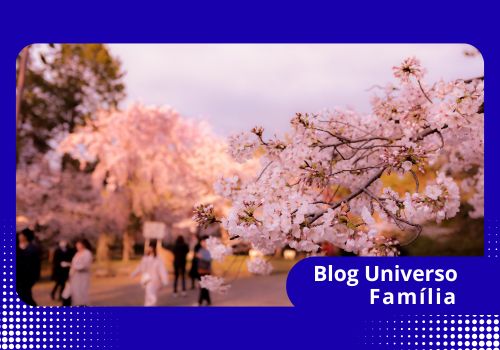
| Ideal season | Spring (March to May) and autumn (September to November) offer mild climates. |
Traveling with children also means adapting your itinerary: days should alternate between dynamic activities and moments of rest.
In Tokyo neighborhoods like Odaiba, shopping malls offer interactive areas and themed cafes where little ones can relax.
Read more: 10 tips for stress-free travel with children
Conclusion
Explore Japan as a family: culture, technology and tradition It is an opportunity to rediscover what is essential: the balance between innovation and humanity.
Japan demonstrates that progress is not at odds with identity, but can actually strengthen it.
Every street, every temple, and every everyday gesture teaches something: the importance of respect, the value of discipline, and the power of shared time.
Anyone who travels to Japan with their family returns not only with photographs, but with a new perspective on life.
Isn't that what we're really looking for when we travel: to connect, learn, and grow together?
Frequently Asked Questions
1. What is the best age to bring children to Japan?
From age five, children can enjoy the rides more, understand the rules, and adapt to the local rhythm.
2. Is it expensive to travel to Japan as a family?
Not necessarily. With good planning and the use of the Japan Rail Pass, it's possible to maximize your budget without sacrificing comfort.
3. How do Japanese people manage coexistence in public spaces?
With a high level of respect and silence. Even on the most crowded trains, calm prevails.
4. Can you find Western food for children?
Yes. Major cities offer international options, although local cuisine tends to be well-suited to children's palates.
5. What values can children learn when visiting Japan?
Responsibility, punctuality, empathy, and respect for the environment. Japan educates through daily example.
Read more: How to find cheap flights to Europe
Final reflection
Visit Japan as a family: culture, technology and tradition It is not only a geographical journey, but an emotional one.
It is understanding how a country can advance technologically without losing its soul.
An experience where every corner tells a story, every custom teaches a value, and every smile reflects the spirit of a people who have known how to unite past and future with unique elegance.