Ads
The Italian cuisine: the most iconic recipes They represent a legacy that transcends borders, uniting tradition, flavor and technique in each dish.
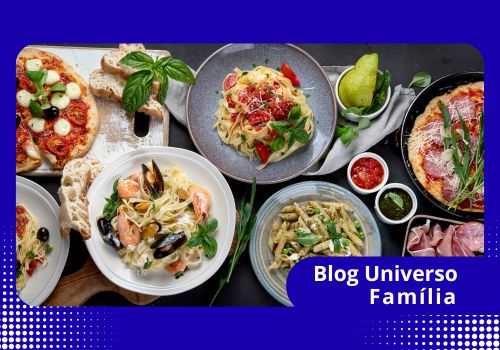
It's not just about eating; it's a way of life, of sharing, and of enjoying. Who can resist the aroma of al dente pasta with a freshly made homemade sauce?
Summary:
- Introduction to the spirit of Italian cuisine
- Essential ingredients and secrets of authenticity
- Iconic recipes with history and technique
- Tips for cooking like a true Italian
- Conclusion and FAQs
The practical soul of Italian cuisine
Beyond its worldwide reputation, the Italian cuisine: the most iconic recipes They have a simple and accessible essence: few ingredients, but of the highest quality.
It's not about complicating the process, but rather respecting the natural flavors.
Ads
Extra virgin olive oil, garlic, ripe tomatoes, and Parmesan cheese form the heart of countless dishes that define Italian culinary identity today.
A study of the Federazione Italiana Cuochi In 2024, it was revealed that 78% of Italians cook at home at least five times a week, prioritizing fresh and seasonal foods.
This attachment to raw materials explains why its cuisine remains one of the most admired in the world.
Ingredients that define authenticity
To achieve the true spirit of the Italian cuisine: the most iconic recipes, there are elements that can never be missing:
| Ingredient | Main origin | Traditional use |
|---|---|---|
| Extra virgin olive oil | Tuscany / Puglia | Base for sauces and marinades |
| Parmigiano Reggiano Cheese | Emilia-Romagna | Pastas, risottos, soups |
| San Marzano Tomato | Campania | Neapolitan sauces |
| Fresh basil | Liguria | Genoese pesto |
| Type 00 flour | Northern Italy | Pastas and pizzas |
The secret lies in simplicity. Each ingredient tells a story. In Italy, it's said that "whoever knows their products, cooks with their soul."

Read more: The most famous traditional desserts in the world
Pasta alla Carbonara: elegance in simplicity
Among the jewels of the Italian cuisine: the most iconic recipes, the Carbonara occupies a special place.
Born in Rome, it has remained faithful to its roots: egg yolk, Pecorino Romano cheese, pancetta, and black pepper. No cream, despite international myths.
A handy trick is to temper the eggs with the residual heat from freshly cooked pasta, preventing them from turning into scrambled eggs.
The result: a creamy, shiny texture that envelops each spaghetti with precision.
👉 Original example: A touch of dry white wine before adding the pancetta intensifies the flavor without altering the authenticity of the dish.
Risotto alla Milanese: the art of patience
He Risotto alla Milanese It's the definition of balance and technique. Originally from Lombardy, it combines arborio rice, saffron, butter, and hot broth.
Preparing it correctly requires attention: the secret is to stir constantly, allowing the starch in the rice to release its natural creaminess.
Patience is a virtue here. It's a process that requires about 18 minutes of active cooking, where every spoonful of broth counts.
This dish, with its golden color and silky texture, embodies Italian artisanal precision.
Saffron, an expensive but powerful spice, adds not only color but depth.
In the words of chef Massimo Bottura, “every grain of rice should be an explosion of flavor, not a mere accompaniment.”
Neapolitan Pizza: The Heritage That Conquered the World
Talk about Italian cuisine: the most iconic recipes not to mention pizza would be an unforgivable mistake.
Born in Naples, the Neapolitan Pizza It was declared Intangible Heritage of Humanity by UNESCO in 2017, thanks to its artisanal process.
To achieve perfection:
- The dough must ferment for at least 24 hours.
- Ideal cooking takes place in a wood-fired oven at 480°C for 90 seconds.
- Only San Marzano tomatoes and bufala mozzarella are used.
Pizza is the perfect metaphor for Italian unity: each region contributes something different, but the result is always harmonious, like an orchestra where all the instruments play the same melody.
Lasagna alla Bolognese: Layers of history and flavor
The Lasagna alla Bolognese combines fresh pasta, meat ragu, béchamel and parmesan into a baked masterpiece.
Each layer represents a story, an effort, a family tradition passed down from generation to generation.
A handy tip: Use a slow-cooked Bolognese sauce for at least two hours to bring out the nuances of the tomato and meat.
Bolognese families often prepare large platters on Sundays, sharing laughter and local red wine.
👉 Original example: For a contemporary twist, some Italian cuisines incorporate spinach leaves between the layers, adding color and a fresh flavor without altering the classic essence.
Analogy of taste: the music of Italian cuisine
It could be said that the Italian cuisine: the most iconic recipes It's like a symphony: each ingredient plays its precise note, and the chef is the conductor, seeking harmony. There's no exaggeration, just balance.
Just as an orchestra doesn't need stridency to excite, Italian cuisine doesn't require complexity to shine.
Tips for cooking like a true Italian
- Respect the ingredients: less is more.
- Control the cooking point: the pasta must be al dente.
- Don't overuse garlic or cheese.: both are accents, not protagonists.
- Use appropriate utensils: Iron or ceramic pans retain flavor better.
- Serves instantly: Freshness is the key.
Cooking like an Italian isn't about following a recipe to the letter; it's about understanding the why behind each step.
A current look at Italian cuisine around the world
In 2025, Italy will continue to be a global benchmark in gastronomy.
According to data from Statista, Italian restaurants occupy the second most popular place in the world, only surpassed by American food.
Mexico, Spain, and Brazil are three of the countries where Italian food consumption is experiencing the greatest growth in out-of-home consumption.
This phenomenon demonstrates that tradition can coexist with modernity.
Many Latin American chefs are reinterpreting classic recipes without losing their essence, respecting the product and cooking times.
Conclusion: The legacy that is cooked in each dish
The Italian cuisine: the most iconic recipes It's not a passing fad; it's a living expression of culture, love, and respect for raw materials.
Each recipe —from the Carbonara to the Risotto alla Milanese— teaches that true sophistication lies in simplicity and well-done.
Cooking Italian is, in essence, a tribute to patience, family, and authentic flavor.
In a fast-paced world, pausing to make a homemade salsa can be an act of love, almost a ritual that connects past and present.
Read more: Ramen, tempura and other Japanese classics
Frequently asked questions about Italian cuisine
1. What makes Italian cuisine unique?
The quality of its ingredients and its faithfulness to local traditions.
Each region has its own character, from the buttery north to the Mediterranean south.
2. What is the most popular Italian recipe in Mexico?
The Neapolitan Pizza and the Pasta Carbonara lead the preferences, according to the portal TasteAtlas 2025.
3. Can Italian cuisine be adapted to modern diets?
Yes. Gluten-free, vegetarian, and light versions are available, maintaining authenticity, using local products and original techniques.
4. Why is Italian cuisine still a global trend?
Because it combines flavor, simplicity, and emotion. Each dish tells a story and is enjoyed with all five senses.
🍝 In summary
Master the Italian cuisine: the most iconic recipes It doesn't require being a chef, but rather having respect for time, ingredients and tradition.
In doing so, you're not just cooking... you're also celebrating life.